Consensus is broken. The Apple App Store, the gatekeeper of mobile distribution, allowed a phishing app to steal funds under the DefiLlama brand. This isn't just a security lapse; it's a structural failure of the Web2-to-Web3 trust bridge. The incident forced DefiLlama to delay its mobile launch, a move that reveals a deeper fragility in how decentralized tools reach users.
Context: The Incident and the Project
DefiLlama, the leading DeFi data aggregator, was preparing to launch its mobile application. The founder disclosed that the launch was delayed due to phishing apps on the Apple App Store. One fake app was recorded stealing funds from a small crypto wallet before Apple removed it days later. That's the surface story.
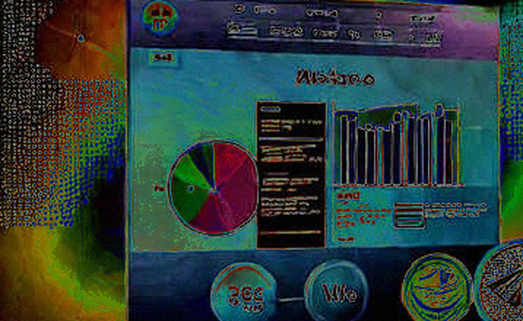
DefiLlama is a no-token, open-source project that tracks Total Value Locked (TVL) across hundreds of protocols. It's an infrastructure layer, a public good. Its value lies in data accuracy and community trust. The mobile launch was meant to extend that trust to a new channel. But the phishing app exploited the very channel meant for expansion.
Core: The Structural Fragility of Centralized Distribution
This event exposes a critical blind spot. DeFi projects pride themselves on code immutability and smart contract security. Yet they rely on centralized platforms like Apple's App Store for distribution. The trust chain is broken: users trust the app store to screen applications, but the store's algorithms fail to catch crypto-native scams.
I've seen this pattern before. In 2020, during my DeFi yield farming experiment on Uniswap V2, I learned that trust in liquidity pools is fragile. Yields are traps. But here, the trap is not in the smart contract; it's in the distribution channel. The phishing app didn't attack DefiLlama's code—it attacked the user's perception of authenticity.
The delay itself is a rational response. If DefiLlama launched its official app alongside a live fake, users would face a severe triage problem. The risk of funds being stolen under the brand's name would outweigh the benefit of mobile accessibility. This is a liquidity problem of attention: fragmented user focus leads to misdirected trust.

Contrarian: Why This Is Actually a Bullish Signal for DefiLlama
The popular narrative will blame Apple. Some will say DefiLlama should have moved faster. But the contrarian view is that this event is a testament to DefiLlama's brand value. Attackers only target projects with high user trust. The presence of a fake app proves that DefiLlama has become a household name in DeFi.
Moreover, the team's decision to prioritize safety over speed is a long-term trust win. In my 2021 NFT metaverse pivot, I audited 50 collections and found only 4% had true interoperability. The lesson: structural integrity beats hype. DefiLlama is applying that lesson here.
Scale kills decentralization. That's the uncomfortable truth. Mobile apps are the ultimate scale tool—they reach millions. But they come with a centralized distribution point. The more DefiLlama scales via mobile, the more it depends on a single gatekeeper. The delay is a pause to rethink that dependency.
Takeaway: The Future of DeFi Distribution
The incident will push DefiLlama to build a more resilient distribution strategy. Perhaps decentralized app stores, direct APK downloads with signature verification, or deeper integration with wallet providers. The industry must realize that mobile is a double-edged sword.
This is a macro lesson. The 2022 Terra/Luna collapse taught me that liquidity illusions can kill. The 2024 ETF institutional framework showed that distribution channels define market access. Now, the DefiLlama incident shows that trust in distribution is the new battlefront.
Will the next bull run be built on trust that can be revoked by a single platform? The answer will define the next cycle of crypto adoption.
Signatures: - Consensus is broken. - Yields are traps. - Scale kills decentralization.