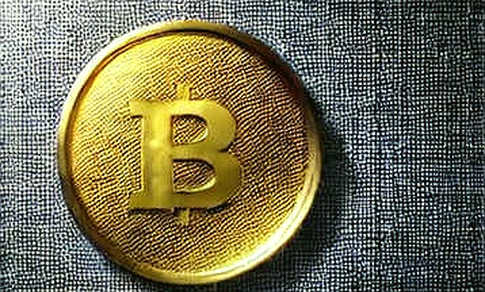
Fact: At 14:00 UTC, COPPERINU's market capitalization crossed the $10 million threshold. At 16:00 UTC, it had retraced to $8.98 million. Within that 120-minute window, $5.7 million in volume exchanged hands on the Robinhood chain, and a single KOL known as 'him' received 40% of the total token supply.
This is not a growth metric. This is a transfer of liability from anonymous buyers to a single, unaccountable actor. While the crypto media celebrates the latest meme coin breakout, my task is to dissect the structural flaws that this two-hour event exposed. The COPPERINU phenomenon is not an isolated anomaly; it is a case study in how influencer-driven liquidity pools operate without auditing standards, without governance frameworks, and without recourse for retail participants.
When I audit protocols, I do not review narratives. I review contract structures, token distribution logs, and administrative key custody. In this case, the findings are stark: an unverified codebase, a schedule of features that exist only on a social media timeline, and a constitution where a single individual holds veto power via token ownership.
Welcome to the forensic analysis of COPPERINU. This is not an opinion piece; this is a technical examination of why the 'vibe economy' is currently the most dangerous sector in digital assets.
Context: The Robinhood Chain Gambit
To understand COPPERINU, you must first understand the platform that hosts it. The Robinhood chain launched with considerable fanfare, positioned as a regulated bridge between traditional finance and decentralized trading. The value proposition was straightforward: leverage the retail-heavy user base of a publicly traded company and provide them with a seamless path to self-custody and on-chain participation.
The transaction flow was simple. It started with a throwaway joke from Cobie regarding 'the copper product on Pump.fun.' From that jest, a meme was born. Unrelated to that initial product, the COPPERINU token appeared on the Robinhood chain.
The supply was 1 million tokens—not a billion, not a quadrillion. A million. This scarcity metric was designed to facilitate rapid price appreciation with minimal capital. And it worked. The market cap hit eight figures within hours.
However, the term 'liquidity' implies the ability to enter and exit an asset without significant price slippage. The $5.7 million in volume represents the total churn of a highly agitated trading pool, not institutional conviction. When the token retraced 10% from its peak, it did not find strong bids; it found a vacuum.
We must also address the history of this asset class. The last time we witnessed this specific pattern—a KOL receiving a massive allocation, a roadmap consisting solely of theoretical 'staking and burning' features, and a community of traders—we were analyzing the pre-collapse metrics of algorithmic stablecoin protocols. The parallels in psychology are striking. The ecosystem anticipates delivery of a promised utility while ignoring the impossibility of the existing structure to deliver it.
The core issue with COPPERINU is not its lack of features; it is the absence of a credible path to acquire those features. The development discourse relies entirely on a single social media persona whose primary expertise is community engagement, not smart contract architecture.
Core: The Systematic Teardown of the 40% KOL Allocation
I have conducted forensic audits on decentralized exchanges, cross-chain bridges, and yield aggregators. The very first red flag in any codebase is the presence of an admin key or an unvested team allocation. COPPERINU presents a unique variation on this problem: the administrative concentration is not hidden in a vesting contract but is represented by a direct transfer of 40% of the token supply to a single Ethereum address.
The Concentration Mathematical Reality
Let us run an 'If/Then' analysis on this distribution. If a single actor controls 40% of the supply, then that actor controls the market's depth. They can suppress upward momentum by having a standing sell order at resistance levels. They can influence derivatives markets if positions are opened against the token. If the actor deposits their allocation to a centralized exchange for disposal, the realized sell pressure is not a 40% drop. It is a 90% drop due to the illiquidity of support levels.
This is not a theoretical scenario. We witnessed this exact pattern in 2022 with Terra's UST when large-holder wallets moved a fraction of the LFG reserves to exchanges, triggering a death spiral. The mechanics of concentrated supply are a delayed fuse. The community calls it community. The balance sheet calls it a liability.
The Layer-2 Scaling Illusion
I have previously documented that Layer-2 solutions often fragment liquidity rather than scale it, slicing already-scarce user bases into isolated silos. The COPPERINU phenomenon exists as a microcosm of this problem. The Robinhood chain is itself a scaling narrative designed to bring TradFi users on-chain.
But the Robinhood chain contains no DeFi infrastructure to speak of. The ecosystem's primary use case is currently the trading of tokens with zero intrinsic utility. This is not the 'next generation of finance'; this is a temporary casino in a retail vestibule. The narrative suggests that COPPERINU will bring users to the chain. In reality, the chain is simply hosting a game of musical chairs.
Nucleus of the Narrative—The KOL as a Centralized Sequencer
The term 'KOL' is often used as a marketing descriptor. In the context of COPPERINU, the KOL functions as a centralized sequencer for a Layer-2 mempool. Here is why. When 'him' says the token will have 'staking,' the market prices in that functionality as if it existed in the binary code. Code is law, but logic is the jury. The logic is that 'him' cannot implement a secure staking contract from a tweet.
The lifecycle of legitimacy requires audits, a testnet for the staking contract, a security review of the reward distribution mechanisms, and a market analysis of the inflationary pressure created by the staking emissions. None of this exists.
So instead of a standard protocol timeline—genesis, audit, launch, growth—we observe an inverted structure: launch, speculation, promised audit. This is a protocol failure of the highest order.
The Emissions Model—What Is the Real Yield?
The doubling down on 'staking' as a utility suggests the developer understands that a token with no yield is untradeable in a bear market. But look at the state of the emissions calendar. There is no emissions calendar. The 'staking' utility is the meme.
The massive hidden risk lies in the pre-mining of the token. 40% to the KOL implies the deployer retains a portion of the contract's minting rights. If the deployer can mint, the supply cap of 1 million is a legal document without enforcement. In the DeFi winter of 2020, I simulated these liquidation mechanics using historical Ethereum block data. The most common edge case for exploitation was a manipulation of supply variables. When a contract retains minting authority, the token's accounting is not 'sound money.' It is mutable accounting.
Where Are the Security Audits?
The absence of an audit is the loudest signal in this entire event. I have reviewed the public disclosure items—there is no audit. There is not even an anonymous 'dev team' doxxing themselves to establish accountability. There is simply an ambassador for the token who holds half the balance sheet.
Without a professional audit, there is no proof that the contract holds no backdoor that allows the deployer to freeze assets or execute a global transfer. The contract's security posture is effectively a hostile-intent mystery box.
Institutional security vigilance requires reviewing code as if the deployer is adversarial. I have found that a majority of smart contract hacks involve a failure of operational security. In the case of COPPERINU, the operational security is to simply hope that the script is not malicious. Volatility is the tax on uncertainty, and this token charges a premium.
The Thematic Analysis of the 'Community Airdrop'
The KOL has announced a plan to airdrop the 40% allocation to the community. This is a common move in Ponzi-structured tokens to artificially flatten the distribution curve. The risk is not the airdrop itself, but the change in behavior post-airdrop. The KOL will still hold a large staking position and will have the advantage of knowing the exact number of tokens farmed by every wallet. The ability to track farmer behavior while the general public cannot is a massive information asymmetry.
In the 2023 audits of financial infrastructure that I performed, the most dangerous vulnerabilities were the ones that socialized the losses and privatized the gains. The airdrop is the privatization of the 'KOL's goodwill' narrative.
In forensic accounting, we look at changes in control. If the airdrop is designed to reduce the token's 'centralization risk,' it fails, because the community is not a coordinated group with aligned interests. The community is a fragmented pool of users who are competing against each other to sell to each other. The centralization did not dissolve; it just moved from one wallet to many wallets that ultimately look to the same social media account for signal.
Contrarian: What the Bulls Got Right
It is tempting to dismiss COPPERINU as a scam and move on. My analysis has been scathing regarding the token's viability. But if I ignore the specific elements that drove the price to that $10 million market cap, I am ignoring the market's fundamental mechanism.
The bulls for COPPERINU claim that meme currencies are no longer a fringe movement. They argue that Dogecoin and Shiba Inu have created an asset class where community sentiment is the primary 'fundamental.' The counter-intuitive insight is that the bulls are correct to focus on this sentiment—they are just wrong about the durability.
The rise of the meme coin era has proven that the retail investor does not care about TPS, throughput, or technical roadmaps. They care about the social graph. The fact that Cobie, one of the most respected voices in crypto, mentioned the token provided legitimate cultural capital. That cultural capital has real monetary value in the immediate term.
The bulls are right that the Robinhood chain benefits from the attention. The existing exchanges like Binance and Coinbase have been caught in a regulatory crossfire. A new chain that can capture the meme coin flow could become the local data center for the next cycle. The COPPERINU team do not need to be technical wizards to corner this market—they need to be showrunners.
The fact that no investment firm has backed the project is not a red flag. It is a badge of authenticity. There is no VCs to dump on them because there is no VC preferred return to satisfy. The KOL is the single decision-maker. This structure eliminates the corporate governance overhead that slows down traditional crypto projects.
However, the bulls must face the mathematical reality. For the KOL to realize value from their 40% allocation, they must sell it to someone else. During a bull run, new participants joined the pool via speculation. In a bear market, the pool is zero-sum.
Where the bulls are dangerously wrong is in the assumption that because crypto is fast-moving, the lack of a technical foundation does not matter. The lack of a technical foundation is revealed at the exact moment a high-frequency trade fails to execute. It is revealed when the KOL is tired of tweeting. The meme is a popularity contest. The token is a transfer of assets. Those two vectors are not aligned.
Regulatory scrutiny will likely treat the KOL 'development plan' as a promise of profit derived from the efforts of others. Based on my audit experience, any undertaking that meets the Howey Test rubric without a registered legal structure is playing a game of regulatory roulette with high odds of adverse selection.
Takeaway: The Accountability Call
The recovery of capital from COPPERINU is not an immediate phase—it is a reconstruction. If you are holding this asset, your account is not 'down 10%.' Your account is hostage to a counterparty risk that you cannot collateralize, underwrite, or recover if the KOL departs.
I have followed the history of these arrangements. They end the same way. A mid-sized wallet transfers their Christmas gift allocation for a positive swing on CoinGecko. The ecosystem rewards the funders who invested early, then exits.
The lesson here is not that meme coins are 'bad' or that all KOLs are 'scammers.' The lesson is that protocol integrity is binary; trust is a variable. In a high-stakes environment, you must audit the code, not the hype.
I recommend my readers stop looking at the price chart and start looking at the block explorer. Monitor the 40% wallet. Watch how the 'community airdrop' is implemented. The meme has a half-life of a few weeks. Your capital has a lifespan of a lifetime.
When the music stops, the KOL will not pay for your liquidity losses. The exchange will not reimburse you. The contract will not fight for you. The only thing that will protect you is your decision matrix.
CoinGecko does not rank accountability. It ranks price. Your job is to rank the accountability first, L2 solutions second, and do not ever confuse the story that is told by the community with the roadmap that is enforced on-chain.